Introduction
Selecting the right pipe material is one of the most critical decisions in any piping project. The wrong choice can lead to premature corrosion, mechanical failure, safety hazards, and costly replacements. The right choice balances performance requirements with economic considerations.
This guide walks you through the key factors to consider and provides a decision framework for choosing between stainless steel, carbon steel, nickel alloys, copper, and aluminium pipes.
Key Selection Factors
1. Operating Temperature:
2. Pressure Rating:
3. Corrosion Environment:
Material Comparison Matrix
| Factor | Carbon Steel | Stainless Steel | Nickel Alloys | Copper | Aluminium |
|---|---|---|---|---|---|
| Cost | ★★★★★ | ★★★☆☆ | ★☆☆☆☆ | ★★★☆☆ | ★★★★☆ |
| Strength | ★★★★★ | ★★★★☆ | ★★★★★ | ★★☆☆☆ | ★★★☆☆ |
| Corrosion Resistance | ★★☆☆☆ | ★★★★☆ | ★★★★★ | ★★★★☆ | ★★★☆☆ |
| Max Temperature | ★★★☆☆ | ★★★★☆ | ★★★★★ | ★★☆☆☆ | ★☆☆☆☆ |
| Weldability | ★★★★★ | ★★★★☆ | ★★★☆☆ | ★★★★☆ | ★★★☆☆ |
| Weight | ★★☆☆☆ | ★★☆☆☆ | ★★☆☆☆ | ★★★☆☆ | ★★★★★ |
| Availability | ★★★★★ | ★★★★☆ | ★★☆☆☆ | ★★★☆☆ | ★★★★☆ |
Decision Framework
Follow this decision framework to narrow down your material choice:
Step 1: Define Service Conditions
Step 2: Check Code Requirements
Step 3: Evaluate Corrosion
Step 4: Consider Economics
Quick Selection Guide by Application
Oil & Gas Pipelines: Carbon Steel (API 5L) — cost-effective, well-established codes
Refinery Process Piping: Carbon Steel (A106) or SS 316 depending on service
Chemical Processing: SS 316L, Hastelloy, or Inconel depending on chemicals
Marine/Offshore: Duplex SS, CuNi 90/10, or Inconel 625
Food & Pharmaceutical: SS 316L (sanitary grade, electropolished)
HVAC & Plumbing: Copper Type L or K
Structural & Architectural: Aluminium 6063 or SS 304
Aerospace: Inconel 625/718, Aluminium 7075
Power Generation: A106 Gr.B (steam), SS 316 (cooling), A671/A672 (main steam)
Cryogenic Service: SS 304L, ASTM A333 Gr.6, Aluminium
Starlight Tubes manufactures pipes in all these materials. Our technical team can help you select the right material for your specific application. Contact us for expert material selection assistance.
Frequently Asked Questions
Q.How do I choose between stainless steel and carbon steel pipe?
Choose carbon steel when the environment is non-corrosive, temperatures are moderate (up to 425°C), and cost is a priority. Choose stainless steel when corrosion resistance is needed, the fluid is aggressive, hygiene is important (food/pharma), or the application involves cryogenic temperatures. Carbon steel is 2-3x cheaper but may require coatings and has shorter life in corrosive environments.
Q.When should I use nickel alloy pipes instead of stainless steel?
Use nickel alloys (Inconel, Monel, Hastelloy) when service conditions exceed stainless steel's capabilities: temperatures above 870°C, exposure to strong acids (HCl, H2SO4), chloride-induced stress corrosion cracking environments, or when the combination of high temperature AND corrosion resistance is needed. Nickel alloys cost 3-10x more than stainless steel but are essential for extreme service.
Related Product Specifications
Require Technical Data or Immediate Quotation?
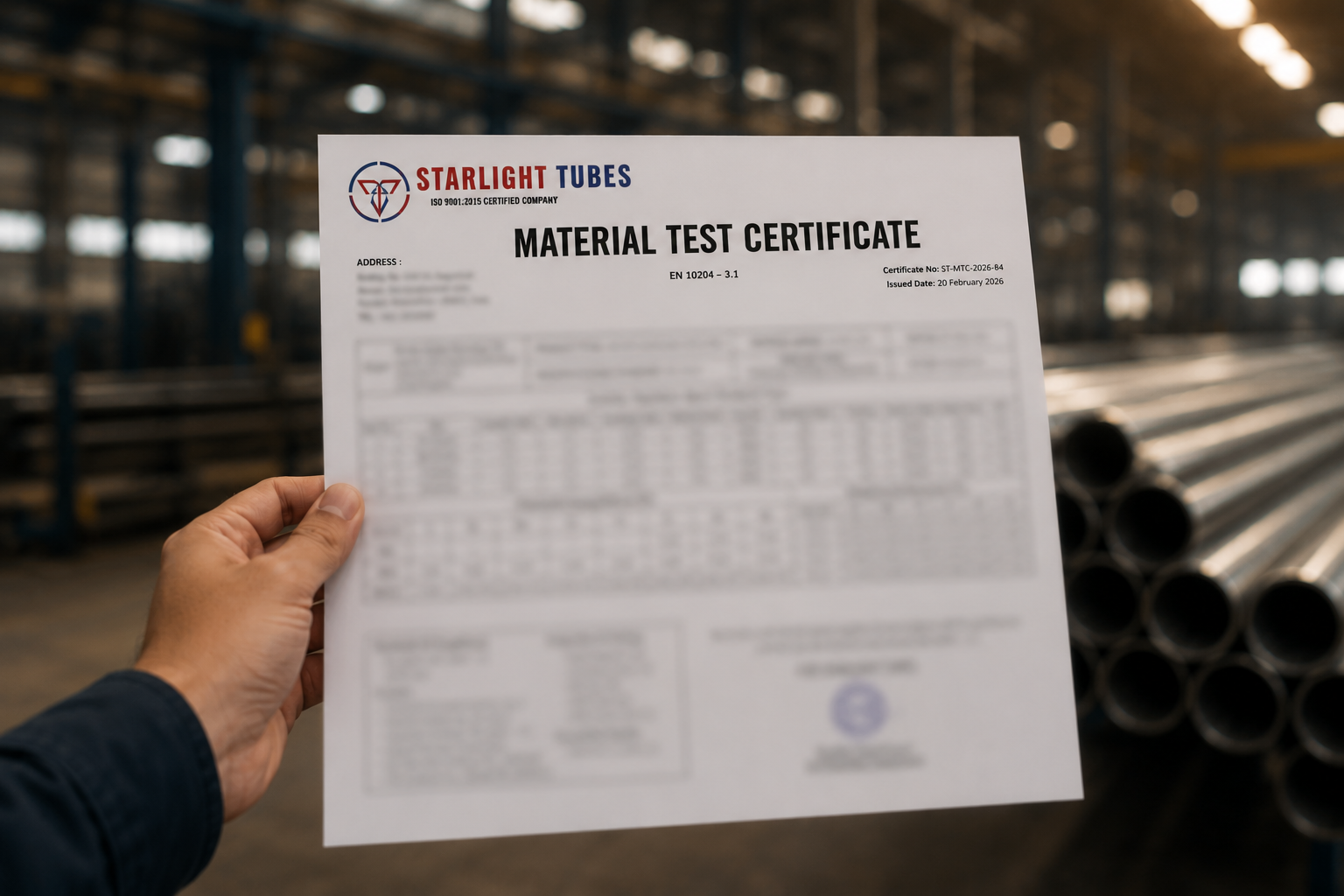
Starlight Tubes supplies these exact specifications with 100% EN 10204 3.1 MTC traceability and rapid worldwide dispatch.