Introduction
Pipe fittings are essential components used to connect, redirect, control, and terminate piping systems across industrial, commercial, and residential applications. Understanding the different types of pipe fittings — their functions, connection methods, materials, and applicable standards — is critical for every piping engineer, plumber, and procurement professional.
This guide covers all major pipe fitting types with their specifications and applications.
Types of Pipe Fittings by Function
Pipe fittings can be categorized by their primary function:
Direction Change: Elbows (45°, 90°, 180°)
Branching: Tees (Equal, Reducing), Crosses, Wyes
Size Change: Reducers (Concentric, Eccentric), Swages
Termination: Caps, Plugs, Blinds
Connection: Couplings (Full, Half, Reducing), Unions, Nipples
Flow Control: Valves, Strainers
Support: Flanges, Stub Ends, Backing Rings
Elbows
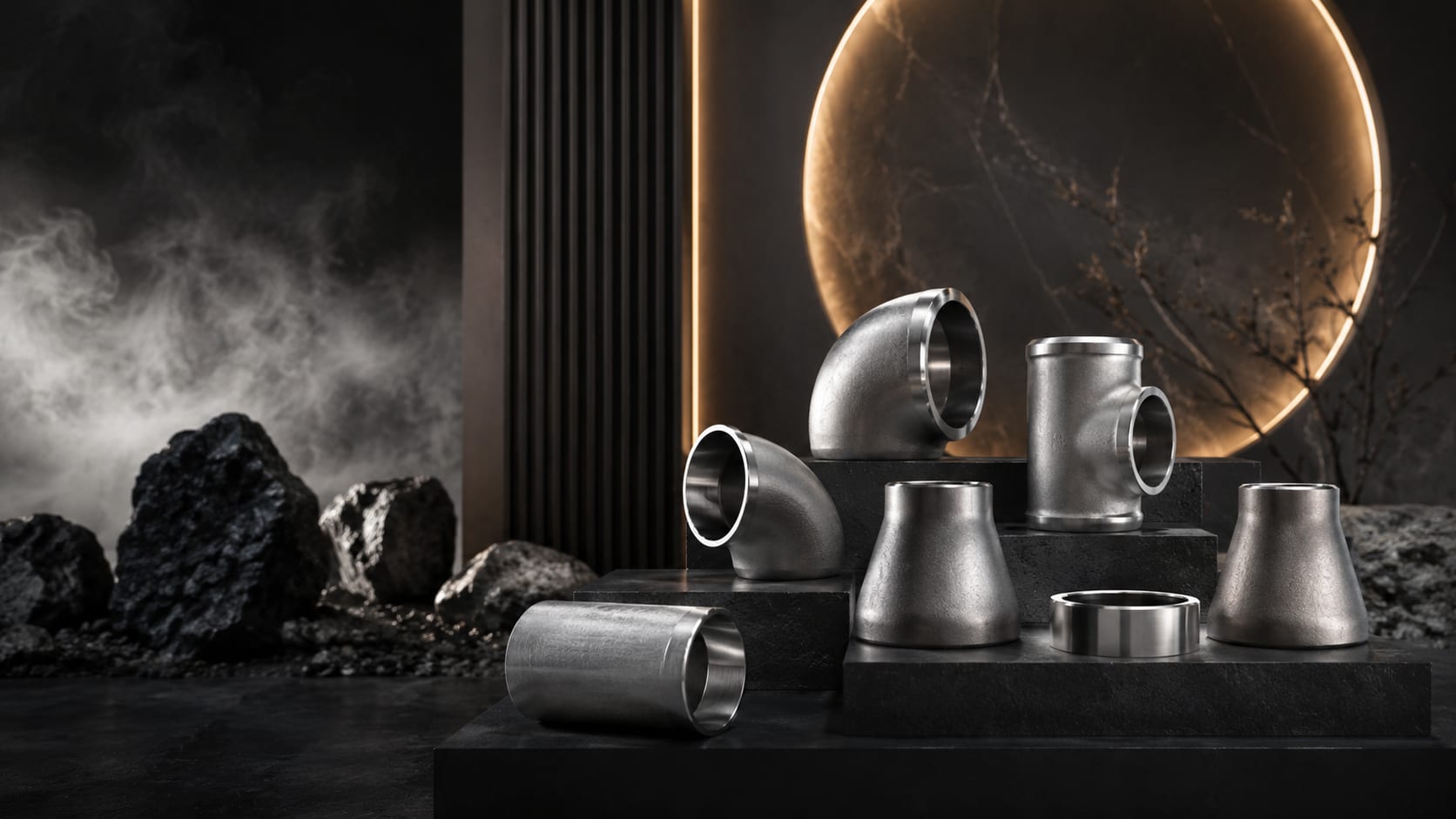
Elbows change the direction of flow in a piping system and are classified by their angle:
90° Elbow: Most common, creates a right-angle turn. Available as long radius (LR, radius = 1.5D) and short radius (SR, radius = 1D).
45° Elbow: Creates a 45-degree change in direction. Used where a gentler turn is needed to reduce pressure drop.
180° Return Bend: Reverses the flow direction completely. Used in tube bundles and heat exchangers.
Standards: ASME B16.9 (butt weld), ASME B16.11 (socket weld & threaded)
Materials: SS 304/316, Carbon Steel A234 WPB, Alloy Steel, Nickel Alloys
Tees and Reducers
Tees create branch connections from a main pipe run:
Reducers connect pipes of different diameters:
Connection Methods
Butt Weld Fittings (ASME B16.9):
Socket Weld Fittings (ASME B16.11):
Threaded Fittings (ASME B16.11):
Flanged Connections (ASME B16.5):
Material Selection
The pipe fitting material must match the pipe material and service conditions:
Stainless Steel (A403 WP304/316): Chemical plants, food processing, pharmaceutical
Carbon Steel (A234 WPB): General industrial, oil & gas, power plants
Low Temp Carbon Steel (A420 WPL6): Cryogenic and low-temperature applications
Alloy Steel (A234 WP5/WP9/WP11/WP22): High temperature and pressure service
Nickel Alloys (Inconel, Monel, Hastelloy): Extreme corrosion and temperature resistance
Duplex/Super Duplex: Offshore, subsea, and high-chloride environments
Starlight Tubes manufactures pipe fittings in all these materials per ASME, ASTM, and MSS standards.
Frequently Asked Questions
Q.What are the main types of pipe fittings?
The main types are: Elbows (45°, 90°, 180°) for direction change, Tees for branching, Reducers (concentric, eccentric) for size change, Caps and Plugs for termination, Couplings and Unions for connection, and Flanges for bolted connections. They're available in butt weld, socket weld, and threaded connection types.
Q.What is the difference between butt weld and socket weld fittings?
Butt weld fittings (ASME B16.9) are joined by welding pipe ends together and are used for larger sizes (1/2" and above). Socket weld fittings (ASME B16.11) have a recessed socket where the pipe inserts, then a fillet weld is applied — used for small-bore piping up to 2" NPS in high-pressure applications.
Related Product Specifications
Require Technical Data or Immediate Quotation?
Starlight Tubes supplies these exact specifications with 100% EN 10204 3.1 MTC traceability and rapid worldwide dispatch.